Another urban legend states that some cigarette brands (most often Marlboro, Camel, and Kool), or menthol cigarettes in general, are owned by, manufactured by, or otherwise have connections to the Ku Klux Klan, or are intended to harm black people specifically.9 There is no credible evidence for any connection between cigarettes and the KKK. A common rumor states that menthol cigarettes or their filters contain fiberglass. April 19 is now widely known as Bicycle Day, because as Hofmann began to feel LSD’s effects, he tried to ride to the safety of his home on his bike.
Therapeutic Effects

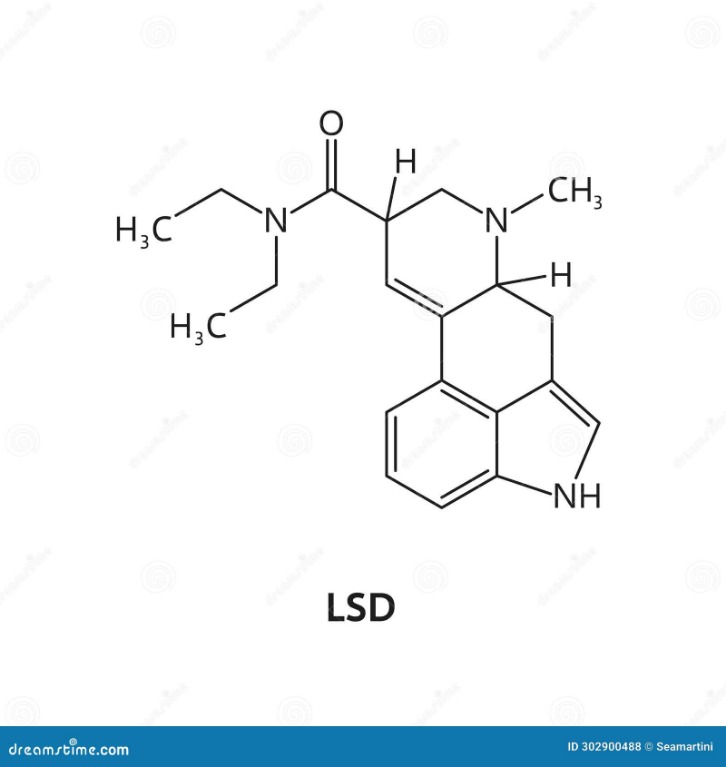
LSD, or lysergic acid diethylamide, is a hallucinogenic drug that was first synthesized a Swiss scientist in the 1930s. During the Cold War, the CIA conducted clandestine experiments with LSD (and other drugs) for mind control, information gathering and other purposes. Over time, the drug became a symbol of the 1960s counterculture, eventually joining other hallucinogenic and recreational drugs at rave parties. Since the late 1990s there has been the identification of many of these synthesised drugs. In Japan and the United Kingdom this has spurred the addition of many designer drugs into a newer class of controlled substances known as a temporary class drug. The U.S. Central Intelligence Agency (CIA) became interested in LSD when they read reports alleging that American prisoners during the Korean War were being brainwashed with the use of some sort of drug or “lie serum”.

They also report that in 2003 and 2004 some psilocybin mushroom chocolate candies were seized near Amarillo, Texas,106 and that hollowed-out lollipops filled with heroin have been seized in New York City.107 The goal of doing so was likely to evade detection by law enforcement by disguising the drugs as candy. There is no evidence that these were ever given to children, much less that any such children were harmed, or even that such lollipops have been found outside of these specific locations or anywhere since early 2004.105 Thus, this legend can be considered to be in a similar vein as the infamous blue star tattoo legend. The popularization of LSD outside of the medical world was hastened when individuals such as author Ken Kesey participated in drug trials and liked what they saw. Tom Wolfe wrote a widely read account of the early days of LSD’s entrance into the non-academic world in his book The Electric Kool Aid Acid Test, which documented the cross-country, acid-fueled voyage of Kesey and the Merry Pranksters on the psychedelic bus “Furthur” and the Pranksters’ later ‘Acid Test’ LSD parties.
Psychedelic Therapy
Doses of different batches can be very variable and ‘bad’ experiences with LSD can usually be related to unwanted high doses, irresponsibility or unpreparedness and/or the ingestion of a different substance. Some national laws prohibit the use of different recreational drugs; medicinal drugs that have the potential for recreational use are often heavily regulated. It can be used in the leaf form of marijuana (grass), or in the resin form of hashish. The drug would sometimes be slipped to persons unknowingly, often through “spiked” punch or drinks.
Psilocybin Mushrooms
That is why in psychedelic-assisted psychotherapy, 200+ µg are used.It’s been shown that mystical experiences can deeply change your identity and the higher the dose you take, the more intense they will be. Do not, however, start with a strong dose if you don’t have a trip sitter nearby.300+ µg can easily cause you to reach a breakthrough where you lose sense of the physical world. You will become so conscious that you will “go unconscious.”The last thing you want is to start lying unconscious on a street or in a club. Keep in mind that the higher the dose you take, the more important it is to be in a safe environment.Some people are more sensitive than others.
Psychedelic Subculture Goes Mainstream
The last country to produce LSD legally (until 1975) was Czechoslovakia;citation needed during the 1960s, high-quality LSD was imported from the communist country to California, a fact appreciated by Leary in The Politics of Ecstasy. Huxley was introduced to psychedelic drugs in 1953 by a friend, psychiatrist Humphry Osmond. Osmond had become interested in hallucinogens and their relationship to mental illness in the 1940s. During the 1950s, he completed extensive studies of a number of drugs, including mescaline and LSD. As noted above, Osmond had some remarkable success in treating alcoholics with LSD. LSD, potent synthetic hallucinogenic drug that can be derived from the ergot alkaloids (as ergotamine and ergonovine, principal constituents of ergot, the grain deformity and toxic infectant of flour caused by the fungus Claviceps purpurea).
Notable People
However, there have been no known cases of microwaving (or baking) babies involving LSD specifically, or any other psychedelic drug, including cannabis. However, there have been many reported cases of psychotic violence under the influence of PCP. PCP, a dissociative anesthetic, is unrelated to LSD, a psychedelic drug. Sandoz saw it as a help to doctors and therapists so they could get a chance to gain insight into how someone who was mentally ill might see the world. It is known today, that the effects of LSD are very different from those of delusional mental illnesses, such as schizophrenia. For their patients, it was a chance to uncover hidden feelings and thoughts, which could be dealt with in therapy.
Psychedelic Microdosing
Stanley’s efforts supplied the drug to several figures who would become advocates for LSD, including novelist Ken Kesey. Stanley also was a personal supplier of LSD to the Grateful Dead (for whom he also provided early financial support and served as sound engineer). Another major advocate of LSD was American psychologist Timothy Leary. Even when used repeatedly over long periods of time LSD is not addictive and there is no withdrawal syndrome on discontinuation of use. However if LSD is used daily for several days tolerance to its hallucinogenic effects will build up, meaning a user requires larger doses of LSD to achieve the same result.
Some problems developed, as some casual users began to experience side effects, such as “flashbacks” and psychotic symptoms, though both of these are rare. Due to the spread of LSD use outside of the medical community, the United States government banned LSD (made it against the law to make, have or use) in 1967. By 1962, the Harvard faculty’s disapproval with Leary’s experiments reached critical mass. Leary was informed that the CIA was monitoring his research (see Government experiments below).
Cotton is sometimes used as a crude filter for particulate matter prior to intravenous injection. Other commonly blamed substances include fiberglass if a cigarette filter was used (cigarette filters do not contain fiberglass), or dirt if Mexican heroin was injected.85 In general, cotton fever refers to a fever that users believe is caused by inanimate particulate matter injected into the bloodstream. In reality, the particulate matter causing cotton fever is bacteria from lack of sterile technique. Although endotoxin shed by the bacteria Enterobacter agglomerans, which colonizes cotton plants, has been implicated as the cause of cotton fever,86 most clinical cases demonstrate blood cultures positive for skin and fecal bacteria. In the United States, the Central Intelligence Agency tested the drug on subjects for different reasons.

- Avoid storing it in books, papers, or box packaging as it could drastically lower the dosage of the blotter and potentially cause unwanted effects upon ingesting it.
- The U.S. General Accounting Office issued a report on September 28, 1994, which stated that between 1940 and 1974, the Department of Defense and other national security agencies studied thousands of human subjects in tests and experiments involving hazardous substances.
- The drug’s relation to the 1960s counterculture was likely part of the reason for such legends.
- In 2024, an FDA advisory panel voted against approving MDMA-assisted therapy for PTSD, “raising questions about the credibility of the research being conducted and the safety of those involved in the trials”.
- Due to the spread of LSD use outside of the medical community, the United States government banned LSD (made it against the law to make, have or use) in 1967.
However, in careful analysis of LSD psychosis patients, it appears that those who have strong family histories of major psychosis or psychopathology are more vulnerable than those who do not. Some notable individuals have commented publicly on their experiences with LSD.308309 Some of these comments date from the era when it was legally available in the US and Europe for non-medical uses, and others pertain to psychiatric treatment in the 1950s and 1960s. Still others describe experiences with illegal LSD, obtained for philosophic, artistic, therapeutic, spiritual, or recreational purposes. There are reports of inanimate objects appearing animated, with static objects seeming to move in additional spatial dimensions.61 The auditory effects of LSD may include echo-like distortions of sounds, and an intensified experience of music. Basic visual effects often resemble phosphenes and can be influenced by concentration, thoughts, emotions, or music.62 Higher doses can lead to more intense sensory perception alterations, including synesthesia, perception of additional dimensions, and temporary dissociation. Amongst other cultural applications, psilocybin mushrooms are used as recreational drugs.2 They may be depicted in Stone Age rock art in Africa and Europe, but are more certainly represented in pre-Columbian sculptures and glyphs seen throughout the Americas.
Users who get out of control, or who try to harm themselves, should be taken for medical help. During the 1960s and early 1970s, the drug culture adopted LSD as the psychedelic drug of choice, particularly amongst the hippie community. However, LSD dramatically decreased in popularity in the mid-1970s (see above graph which covers the period 1967–2008). This decline was due to negative publicity centred on side-effects of LSD use, its criminalization, and the increasing effectiveness of drug law enforcement efforts, rather than new medical information.