With the growing burden of various life-threatening diseases, the demand for personalized medicine and digital health is rising, contributing to market expansion. Ongoing collaborations between pharmaceutical and healthcare organizations and government initiatives and policies to boost the development of novel drugs drive market growth. The China prescription drugs market accounted for the largest revenue share in Asia-Pacific in 2024, driven by a large and aging population, rapid urbanization, and healthcare reforms aimed at expanding access to affordable treatments. China is one of the largest markets for both branded and generic prescription drugs, with significant growth in therapeutic areas such as oncology, cardiology, and diabetes. Supportive regulatory changes, growing health insurance coverage, and the rise of domestic pharmaceutical manufacturers are key drivers enhancing drug availability and affordability across the nation.
Increasing Investment In Biopharmaceutical Research And Development
These pharmaceutical products diagnose, treat, and prevent chronic diseases such as cancer, diabetes, and genetic disorders. As noted above, changes in observed prices reflect the relative slopes (the relative elasticities) of both supply-and-demand curves. In legal markets with good data on prices and quantities, estimating demand-and-supply curves is a straight-forward, although often challenging, econometric exercise. The covert nature of illegal drug markets means that prices and quantities are not easily observed, if at all, but some guidance can be found in studies of legal markets. In competitive markets that display constant returns to scale, supply curves tend to be more elastic than demand curves. These assumptions have been explicitly addressed in tobacco and alcohol markets, which find highly elastic supply (Chaloupka et al., 2002).
This FREE sample includes market data points, ranging from trend analyses to market estimates & forecasts. This study complements the 2003 book, Informing America’s Policy on Illegal Drugs by giving more attention to the sources of demand and assessing the potential of demand-side interventions to make a substantial difference to the nation’s drug problems. Understanding the Demand for Illegal Drugs therefore focuses tightly on demand models in the field of economics and evaluates the data needs for advancing this relatively undeveloped area of investigation.
Prescription Drug Statistics – Trends In Usage

With high healthcare spending per capita, aging populations, and sophisticated regulatory frameworks, industrialized nations in North America remain the top markets for pharmaceutical goods. Advancements in biologics, personalized medicine, and RNAi-based therapeutics are enhancing treatment outcomes. Expedited regulatory pathways and growing demand for patient-centric solutions further support market growth.
Cardiovascular Diseases Segment: Significantly Growing
The Pradhan Mantri Bhartiya Janaushadhi Pariyojana (PMBJP) was launched in India to ensure the availability of quality generic medicines at affordable prices, especially for disadvantaged populations. As part of this initiative, dedicated outlets called PMBJK have been established across the country to provide generic medicines to the masses, further promoting access to affordable healthcare. The biologics and biosimilars (large molecules) segment is expected to grow at the fastest rate over the forecast period.
Expanding Healthcare Access In Emerging Markets Driving Demand
Another distinctive element of illegal drug markets is the intermingling of the supply and demand sides. Many heavy users of illegal drugs engage in some drug selling, with the proportion of seller-users differing by substance (see National Institute of Justice, 2003). Frequent users may account for a large share of the drug-selling workforce and sellers may account for a large share of total consumption; selling is a highly opportunistic activity, so that most dealers do it only on an occasional basis (e.g., Reuter et al., 1990). The level of competition among biological products was significantlylower than for small molecule drugs. In 2017, there were 166biological products with only 1 manufacturer (79 percent ofbiological products), and this increased steadily over time to 216biological products in 2022 (81 percent of biological products, 30percent increase). Of the 268biological products on the market in 2022, 34 biological products(13 percent) had 2-3 manufacturers, 12 biological products (4percent) had 4-5 manufacturers, and 6 biological products (2percent) had 6+ manufacturers.
In response to the pandemic, major pharmacy chains like Walmart, Walgreens Boots Alliance, CVS Health and Rite Aid have reported a sharp increase in demand for flu shots in their U.S. pharmacies in 2020, in some cases double from the previous year. The rest of the world market comprises Latin America and the Middle East & Africa and is currently in a stage of growth. Increasing use of advanced prescription products and increasing healthcare expenditure are projected to fuel the market growth during the forecast period. In terms of therapy, the market is segmented into oncology, central nervous system, vaccines, immunosuppressants, and others.
World Drug Report 2024
Thus, the growing number of approvals of generic drugs drives the US pharmaceutical market share and demand for generic segment. Pharmaceutical is a broad segment that consolidates a group of chemicals classified based on their pharmacological effect and therapeutic use. For instance, alkaloids were the first pure pharmaceuticals derived from plants; they include quinine, nicotine, cocaine, atropine, and morphine. Similarly, some drugs are made of animal origin, which includes glandular extracts containing hormones.
The Unrelenting Pressure Of Healthcare Costs
The IQVIA Institute for Human Data Science contributes to the advancement of human health globally through timely research, insightful analysis and scientific expertise applied to granular non-identified patient-level data. Spotlight on Maryland asked BPD on Thursday morning if the agency could confirm the number of arrests of participants in the city’s drug markets. Two BPD officers, who requested anonymity because they are not authorized to speak to the media, told Spotlight on Maryland on Saturday that they are among several others citywide who are tired of open-air drug markets operating unchecked in Baltimore. To succeed in this evolving landscape, generic drug manufacturers must adopt a set of clear strategic imperatives that move beyond the traditional playbook. Patient advocacy groups have become powerful and influential stakeholders in the healthcare ecosystem.
- This segment is experiencing demand due to contributing factors such as, it is convenience, approachability, and reasonable cost.
- This promotes competition and helps drive down drug prices, making medications more affordable for patients.
- The pharmaceutical market in France is fueled by government healthcare initiatives and increased adoption of biologics and specialty drugs.
- The adult population aged from years holds the largest share in the total population and are the major consumer of prescription medicine.
- The scale of the pharmaceutical industry in the United States is enormous.29 The markets in developing countries are comparatively more diverse, with groups with higher purchasing power investing more in innovation and those with lower purchasing power investing more in generics.
Thankful to the team for the amazing coordination, and helping me at the last moment with my presentation. It was indeed a comprehensive report that gave us revenue impacting solution enabling us to plan the right move. We were impressed by the in-depth customization and inclusion of not only major but also minor players across the globe. The DBMR Market position grid helped us to analyze the market in different dimension which was very helpful for the team to get into the minute details. The most important key figures provide you with a compact summary of the topic of “Pharmaceutical industry in the U.S.” and take you straight to the corresponding statistics. Costa declined to identify countries or banks that may have received any drug money, saying that would be inappropriate because his office is supposed to address the problem, not apportion blame.
The web-based Drug market patterns and trends module contains the latest analysis of global, regional and subregional estimates of and trends in drug demand and supply in a user-friendly, interactive format supported by graphs, infographics and maps. The booklet opens with a look at the 2022 Taliban ban on the cultivation and production of and trafficking in drugs in Afghanistan and its implications both within the country and in transit and destination markets elsewhere. This is followed by a chapter examining the convergence of drug trafficking and other activities and how they affect natural ecosystems and communities in the Golden Triangle in South-East Asia. The chapter also assesses the extent to which drug production and trafficking are linked with other illicit economies that challenge the rule of law and fuel conflict. Another chapter analyses how the dynamics of demand for and supply of synthetic drugs vary when the gender and age of market participants are considered. North America held the largest share of the drugs market which resulting in its dominance in the market in 2024.
What Is The Pharmaceutical Drugs Market Growth Forecast?
In addition, we examine a subset of “specialty”drugs (as opposed to “traditional” or“non-specialty” drugs) and then focus on the top 10 percent ofdrugs based on price, i.e., “highest priced drugs”, most, butnot all, of which are specialty drugs. The highest priced drugs were definedon an annual basis, meaning the drugs change for each year of the sample.Table 1 definesthe types of drugs examined in this report. Furthermore, collaborations between pharmaceutical companies and research institutions have accelerated the development of novel oncology drugs. Lastly, favorable regulatory pathways & expedited approvals for breakthrough cancer therapies have further propelled the growth of this segment, solidifying its dominance in the U.S. In the U.S. market for pharmaceuticals, the transformative clinical outcomes of GLP-1 receptor agonists and GLP-1/GIP dual agonists, have set a new benchmark for obesity treatment. As they are emerged as transformative therapies, delivering unprecedented clinical results.

In fact, demand for heavily addictive substances is consistent with a wide range of price elasticities. Suppose, for example, that an individual spends every cent of her monthly income on crack cocaine. If crack cocaine prices rise by 1 percent with no accompanying change in her economic circumstances, she will spend the same amount and thus purchase 1 percent less crack than she did before. Luksetich and White (1983) suggest, based on early ethnographic work, that heroin addicts may have a fixed budget for all items other than heroin, representing the minimum that is needed for shelter, food, and clothes; if so, there would be unitary price elasticity. In contrast, more affluent users of marijuana, for whom the drug accounts for a small share of their total incomes, may change their total consumption very little in response to price increases. Costs created by the policy intervention, suppliers require a higher price to bring any given quantity of drugs to the market.
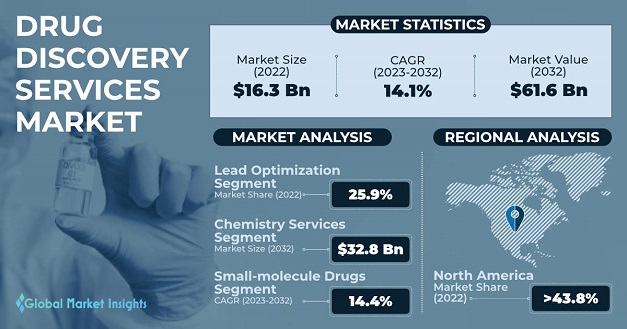
The proliferation of drug cartel culture largely stemmed from the ranchero culture seen in Michoacán. Ranchero culture values the individual as opposed to the society as a whole.78 This culture fostered the drug culture of valuing the family that is formed within the cartel. Since 2007, 30 biosimilars have been launched in the U.S., with 10 more approved and set to launch by the end of 2023. While prescription drugs offer significant benefits in managing illnesses and improving patients’ quality of life, it is essential to use them responsibly to minimize potential risks and side effects. Four decades of unabated growth in drug-related fatalities in the United States shows an escalating public health crisis, though drug use prevalence has not shown much increase since 2002.